Can a tow truck refuse to take my car in the Twin Cities?
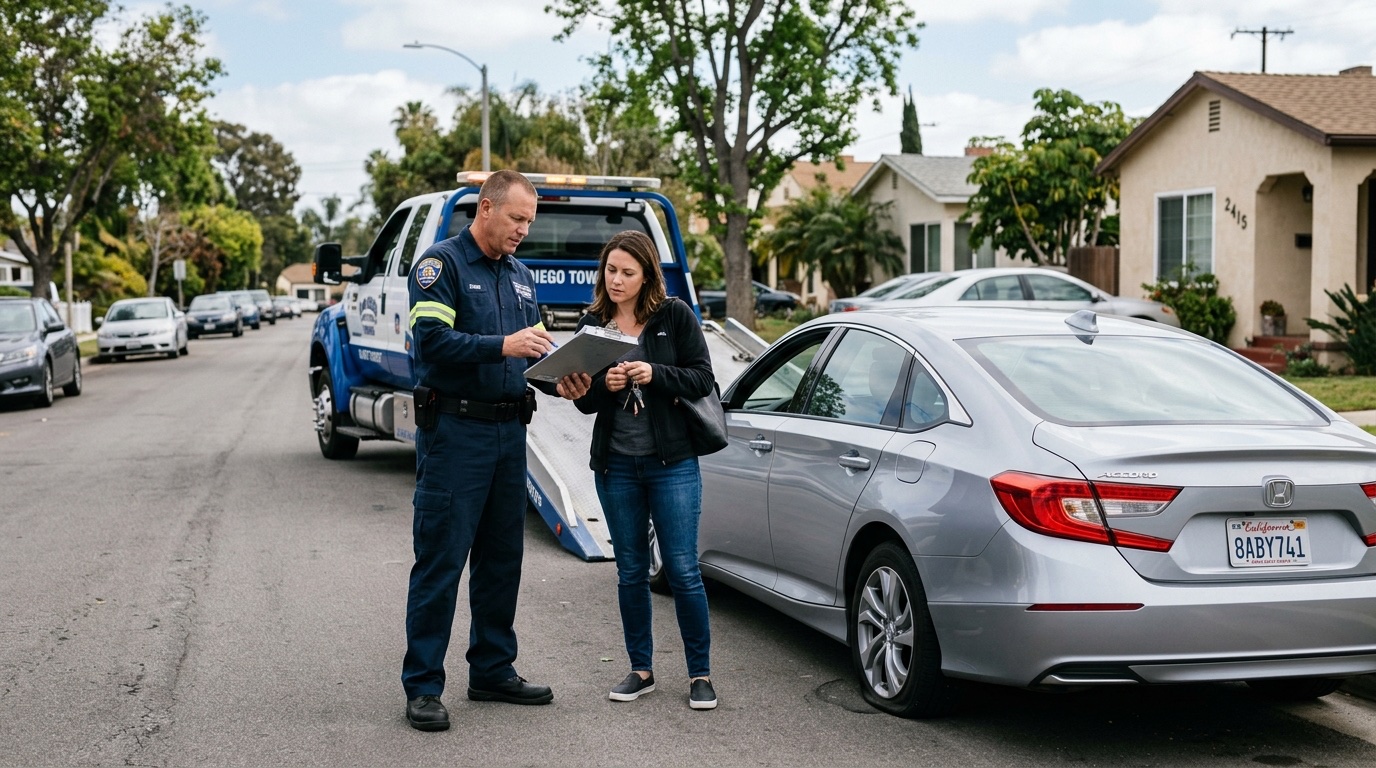
Yes, but only in specific situations, and which rules apply depends entirely on who ordered the tow. Here is when an operator can refuse, and what you are owed either way.
What you'll learn
- The legitimate reasons a Twin Cities tow operator can refuse a job
- The difference between a tow you order and one a city, a suburb or a property owner orders, and why your choice of company only applies to one of them
- What Minnesota Statutes Chapter 168B requires around impound, notice and posting
- Your rights as the vehicle owner if you are refused
- What changes when the breakdown happens in a suburb rather than in Minneapolis or St. Paul
Step by step
- Reason 1 - Vehicle weight or size exceeds the truck's rated capacity, for example a standard wheel-lift truck sent to a loaded box truck or bus that needs a heavy-duty rig.
- Reason 2 - Vehicle is unsafe to tow: a hazardous fluid leak, a fire risk, or structural collapse.
- Reason 3 - The operator cannot verify ownership, with no registration and no clear vehicle-to-driver match.
- Reason 4 - The location is unsafe for the operator: an active hostile environment, no safe pull-off, a live work zone, or a freeway spot with no usable shoulder.
- Reason 5 - The operator does not service that area or that vehicle type, for example an electric vehicle call to an operator with no flatbed.
- When an operator is expected to take it: a tow you requested and chose the company for, and an insurance or motor-club dispatch on the operator they sent.
If an operator refuses and you are stranded somewhere unsafe, call 911. MnDOT runs the FIRST freeway patrol on about 220 miles of Twin Cities interstate, roughly 6 a.m. to 8 p.m. on weekdays, and because they patrol constantly they are often first to reach a disabled vehicle. FIRST crews push a stalled vehicle out of a live lane, jump a battery, change a tire, hand over a small amount of free gas and call a tow. They do not tow the vehicle away themselves.
Yes, but only for real reasons
A Twin Cities tow operator can refuse to take your vehicle, but only in specific situations, not because they do not feel like making the trip and not because a better-paying job is waiting. The line that matters most here is not which company shows up. It is who ordered the tow, because that single fact decides whether you have any say at all.
The legitimate reasons an operator can refuse
- The vehicle exceeds the truck's safe rating. A standard wheel-lift rig cannot safely tow a loaded box truck, a bus or a heavy commercial vehicle. The metro produces a lot of those: the freight and distribution centers along I-694 in Fridley, the industrial river flats in South St. Paul, and the warehouse districts near the airport all put big commercial vehicles on the road.
- The vehicle is unsafe to tow. A fuel or fluid leak, a fire risk, or a body that has lost structural integrity after a crash all change the job from a tow into a recovery, and sometimes into a job for the fire department first.
- Ownership cannot be verified. If you cannot produce a driver's licence, a registration or other proof that you have authority to move the vehicle, the operator can refuse. That is not obstruction, it is what stops a tow truck from becoming a theft tool.
- The location is unsafe for the operator. On I-35W, I-94 or the MN-62 Crosstown at rush hour there is often no usable shoulder at all. An operator who says they will not work a live lane is right.
- The operator does not serve that vehicle type or that area. An operator without a flatbed may legitimately refuse an all-wheel drive or electric vehicle, because the alternative is damaging your drivetrain.
Who ordered the tow changes everything
A tow you order
You pick the company, you agree the price before the truck rolls, and the operator either takes the job or tells you why not. This is the only category where your choice of company means anything.
A city or suburban tow
If Minneapolis Police, St. Paul Police or a suburban department order the tow, you do not choose the company and you do not choose the destination. A Minneapolis tow goes to the City impound lot at 50 Van White Memorial Blvd, and you can look the vehicle up by plate or VIN at minneapolismn.gov before you go. A St. Paul tow goes to the Police impound lot at 830 Barge Channel Rd, open every day 8 a.m. to 10 p.m., unless it is a snow-emergency tow, which goes to the lot at 1129 Cathlin St near the fairgrounds instead. Every suburb runs its own arrangement, often a contracted operator, and sets its own fee, so a Bloomington or Edina tow is not on the Minneapolis or St. Paul schedule.
A private-property tow
A vehicle towed from a lot, apartment complex or business is a private-property tow under Minnesota Statutes 168B.035 and 168B.04. You did not order it and you cannot choose the company; the property owner did. What you do get is a set of protections in state law, and they are worth knowing.
What Minnesota law requires
- A reasonable charge. Under 168B.035, subdivision 4, the charge for a private-property tow "must be reasonable for the type of vehicle removed and the circumstances surrounding its removal." There is no statewide dollar cap, so "reasonable" is the standard.
- Proper posting or a waiting period. Under 168B.04, a vehicle on posted residential or commercial property, or on a single-family or duplex residential property, may be towed immediately; on unposted commercial property there is a 24-hour wait; a vehicle tagged on a highway by a peace officer has a 4-hour wait. The statute uses the phrase "properly posted" but does not define sign size, wording or placement, so those specifics come from local ordinance.
- Notice within five business days. Under 168B.06, the party that impounds the vehicle must send notice to the registered owner and any identifiable lienholder within five business days of taking custody.
- A sale timeline before the vehicle is gone. Under 168B.051, a junk or abandoned vehicle may be sold 15 days after notice; an unauthorized vehicle in Minneapolis or St. Paul in 15 days, or 45 days if the owner files a statement of intent to reclaim inside that window; in other jurisdictions, 45 days.
- The repealed four-hour myth. Minnesota does not require a four-hour wait after a parking citation before a public-property tow. That rule (former 169.041) was repealed in 2010. The 4-hour figures that remain in 168B.04 are about tagged highway vehicles and posted public lots, which is a different thing.
- Lien-sale notice. Under 514.18 through 514.22, a storer who claims a towing and storage lien must give secured creditors on the title certified-mail notice 45 days before a sale, and a lien sale is a public auction held between 9 a.m. and 5 p.m. with published notice for three successive weeks.
Suburbs are not the two big cities
Bloomington, Edina, Brooklyn Park and every other suburb runs its own impound arrangement and sets its own administrative fee. It is not the Minneapolis or St. Paul schedule, and no single suburban figure is published network-wide, so the only reliable number is the one that suburb gives you. Call the police non-emergency line for the city where the car was towed and ask which lot has it and what it costs.
What to do if you are refused
- Ask why, and write it down. A legitimate refusal has a specific reason attached to it, and an operator who cannot give one is telling you something.
- If you are somewhere unsafe, call 911. MnDOT's FIRST crews work the freeways to clear hazards and help stranded drivers, but they patrol during set hours and they do not tow your vehicle away.
- Call a company that runs the right equipment. A refusal on capacity or vehicle type is a routing problem, not a dead end. Leave exactly what the vehicle is and where it sits.
- For a private-property tow you believe was unlawful, keep every record. The charge must be reasonable under 168B.035, and the notice, posting and sale-timeline rules in Chapter 168B are what you point to if the tow broke them.
Patterns we see across this metro
- No-shoulder refusals. A driver stopped on I-35W or the Crosstown where there is nowhere to set up gets told to wait. That is usually the right call, and the fix is a scene set up properly rather than a faster truck.
- Out-of-town and rental refusals. A traveller in a rental near MSP airport, a student car registered in another state near the U of M, or a Wisconsin commuter on I-94 near Woodbury all run into ownership-verification problems more often than locals do.
- Heavy-duty cascades on the freight corridors. A truck fails on I-694 or I-494, a light-duty rig arrives, and nothing can happen until a properly rated wrecker is dispatched. Confirming weight and load on the first call prevents the whole sequence.
- Winter surges. On a declared snow emergency, Minneapolis alone tows on the order of a thousand vehicles clearing its plowing routes, so on the worst nights every operator in the metro is committed and the honest answer is a longer wait, not a refusal.
Numbers worth keeping
- (612) 673-5777 - the Minneapolis Impound Lot, to check whether the city has your vehicle and what is owed.
- 651-266-5642 - the St. Paul Police Impound Lot at 830 Barge Channel Rd.
- 651-502-7480 - the St. Paul snow-emergency impound lot at 1129 Cathlin St.
- 612-348-SNOW (7669) and 651-266-7569 (PLOW) - the Minneapolis and St. Paul snow hotlines.
Rather have a pro handle it?
Towing and roadside service across the Twin Cities metro. One local line, taking calls day and night.
Keep learning.
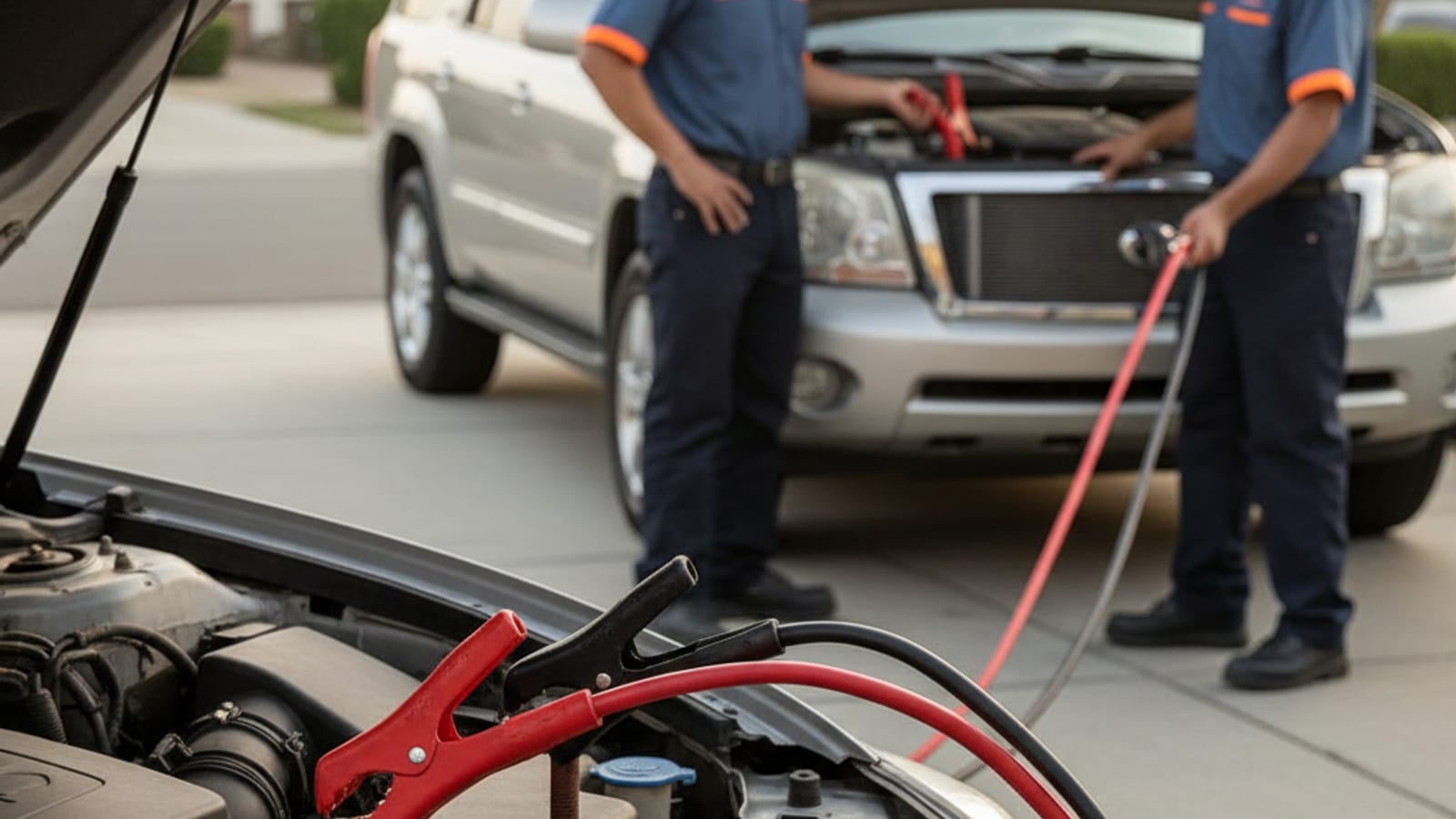
Jump-start a dead battery safely
Jumper cables are simple until you hook them wrong. Do it right and you'll avoid sparks, ruined electronics, and a tow you didn't need.
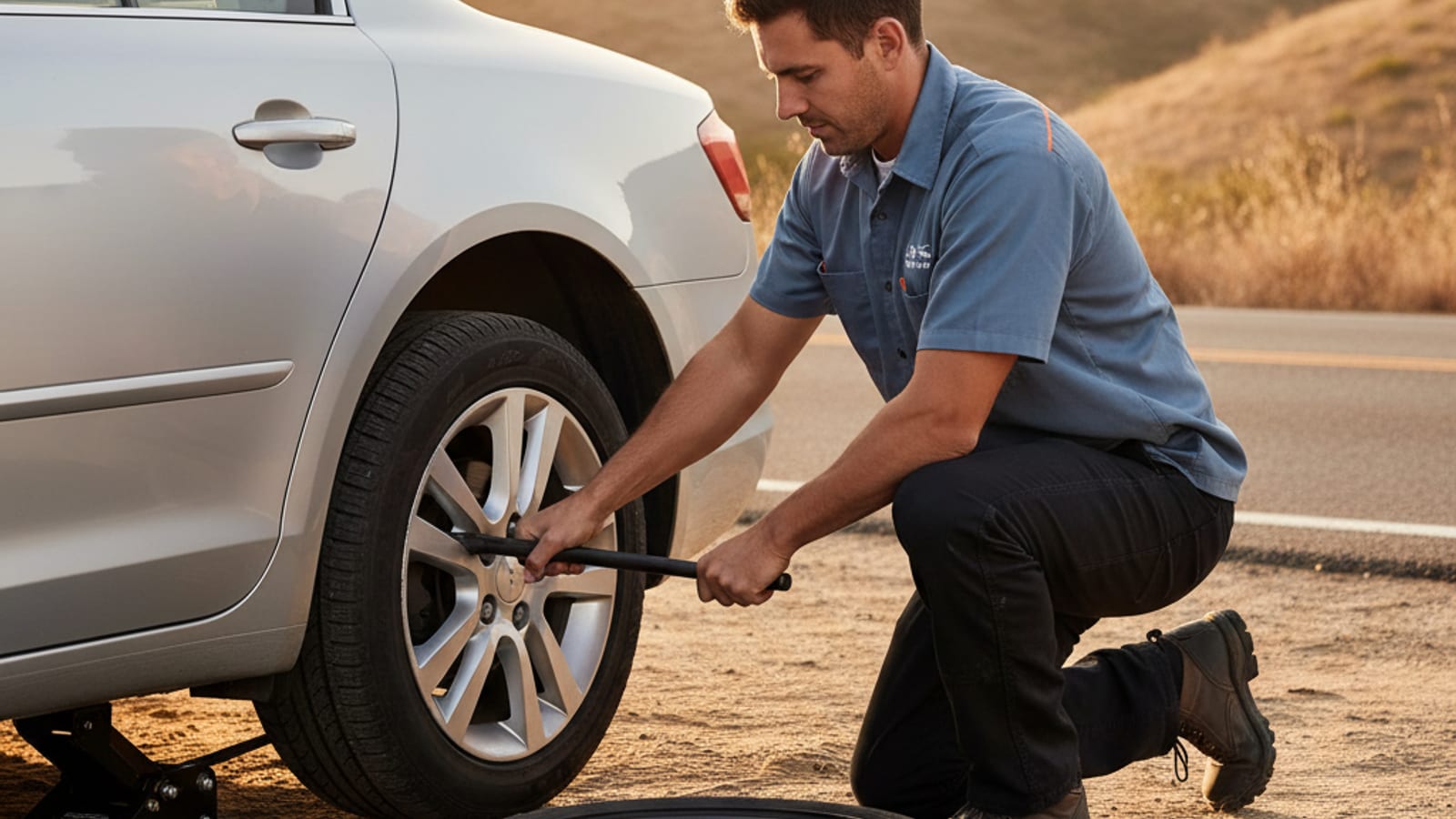
Change a flat tire on the side of the road
The difference between a 20-minute shoulder stop and an hour on the phone with a tow company is knowing where the spare and jack live before you need them.
What to do if you slide on ice or hit a flooded low spot
Twin Cities winters glaze bridges and ramps before flat streets, and a heavy spring rain fills a low underpass faster than it looks. First step: stop making it worse.