An electric vehicle should be towed on a flatbed, not pulled down the road with its wheels turning. Flat-towing an EV, or even towing it with the drive wheels on the ground, can damage the motor and the electronics, because the wheels spin the motor and that generates current the car is not set up to absorb while off. When you call for an EV tow, say it is electric so the operator brings a flatbed. Then put the car in its tow or transport setting if you can.
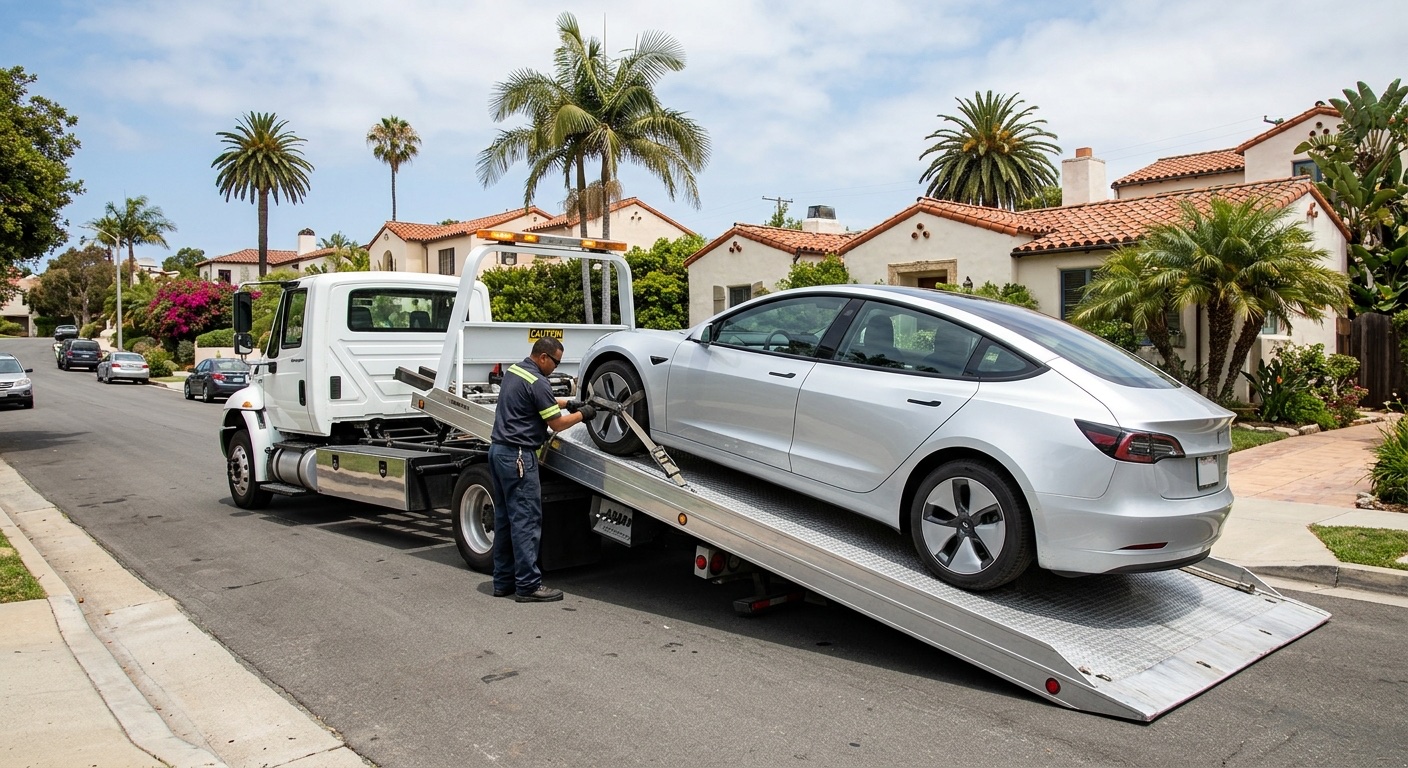
Why an EV needs a flatbed
On most electric vehicles, the wheels are connected to the motor even when the car is off, and rolling the drive wheels turns that motor. A spinning motor generates electricity, and towing at road speed with the wheels down can push more through the system than it is meant to handle when parked. A flatbed lifts all four wheels off the ground, so nothing spins and nothing gets stressed. This is why a proper EV tow is a flatbed job, not a hook-and-drag.
Transport Mode on a Tesla
A Tesla will not roll freely when it is off, because it holds the parking brake and can go into a protective state. Tesla provides a Transport Mode, sometimes called tow mode, that releases the brakes so the car can be winched onto a flatbed. On current Teslas you reach it through the touchscreen under the service or towing menu, and the car has to have enough charge to respond. If the battery is fully dead, the screen may not come up, so tell the operator that too, because getting a bricked EV onto a flatbed is a different job.
Other electric brands have their own tow or transport procedures in the owner’s manual. The idea is the same: release the car so it can be pulled onto the deck without dragging locked wheels.
Cold winters and EV range
The Twin Cities are among the coldest major metros in the country, averaging around 51 inches of snow a year, and cold hits EVs hard. A battery loses range in deep cold, and heating the cabin pulls from the same pack, so a car that goes far in July can come up short in January. That matters for towing because a “dead” EV in winter is often a battery that dropped faster than the driver expected. Plan your charging with a cold-weather cushion, and if you do run out, a flatbed to a charger is the fix.
What to tell the operator
When you call, say it is an electric vehicle, name the make and model, and say whether the car still has enough charge to go into its transport setting. Mention where it is and where it needs to go, a home charger, a service center, or a public charger. Those details decide whether the operator can put it in transport mode on site or has to plan for a fully dead pack.
Getting an EV tow
Quick Tow Minneapolis is a referral service. We take the call and match you with an independent local operator who has a flatbed and handles electric vehicles, and that operator quotes the job before rolling. Tell us the make and model, the charge state, and the destination, so the right truck shows up the first time.
Frequently asked questions
Can I flat-tow an electric car? No. Towing an EV with its drive wheels on the ground can damage the motor and electronics. It should ride on a flatbed with all four wheels off the ground.
How do I put a Tesla in Transport Mode? Through the touchscreen under the service or towing menu, which releases the brakes so the car can be winched onto a flatbed. The car needs enough charge to respond, so mention it if the battery is dead.
Does cold weather really cut EV range? Yes. Deep cold reduces battery range and cabin heating draws from the same pack, so winter range runs shorter than summer. Plan charging with a cold-weather cushion.
What if my EV battery is completely dead? Tell the operator, because a fully dead EV may not enter transport mode and needs a different loading approach. A flatbed to a charger is still the fix.